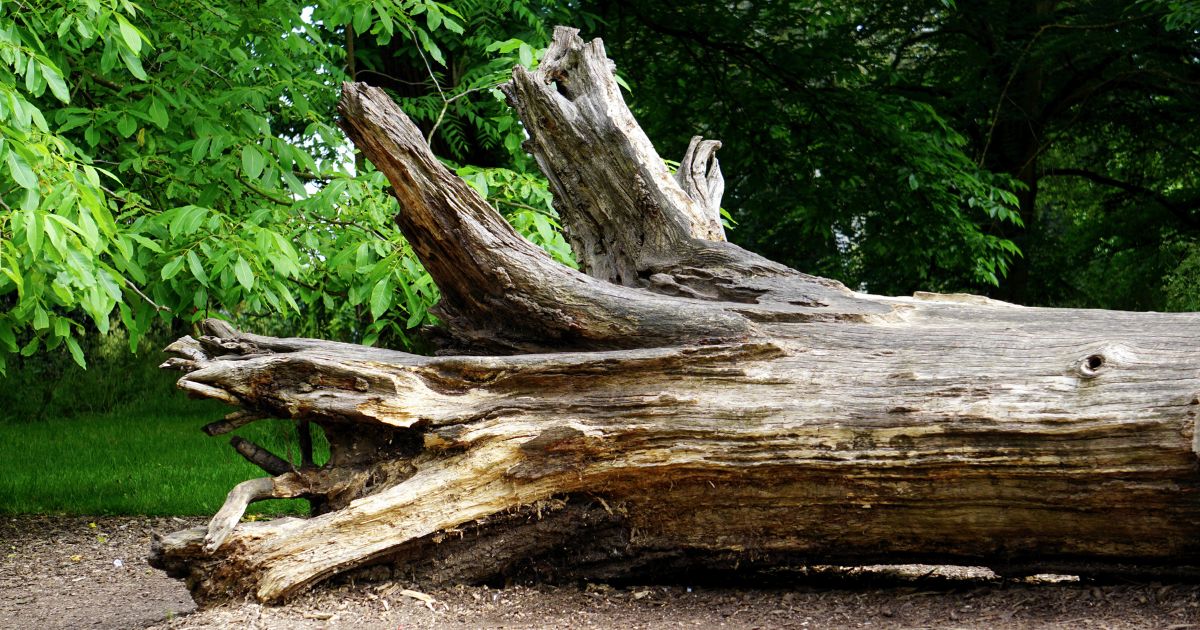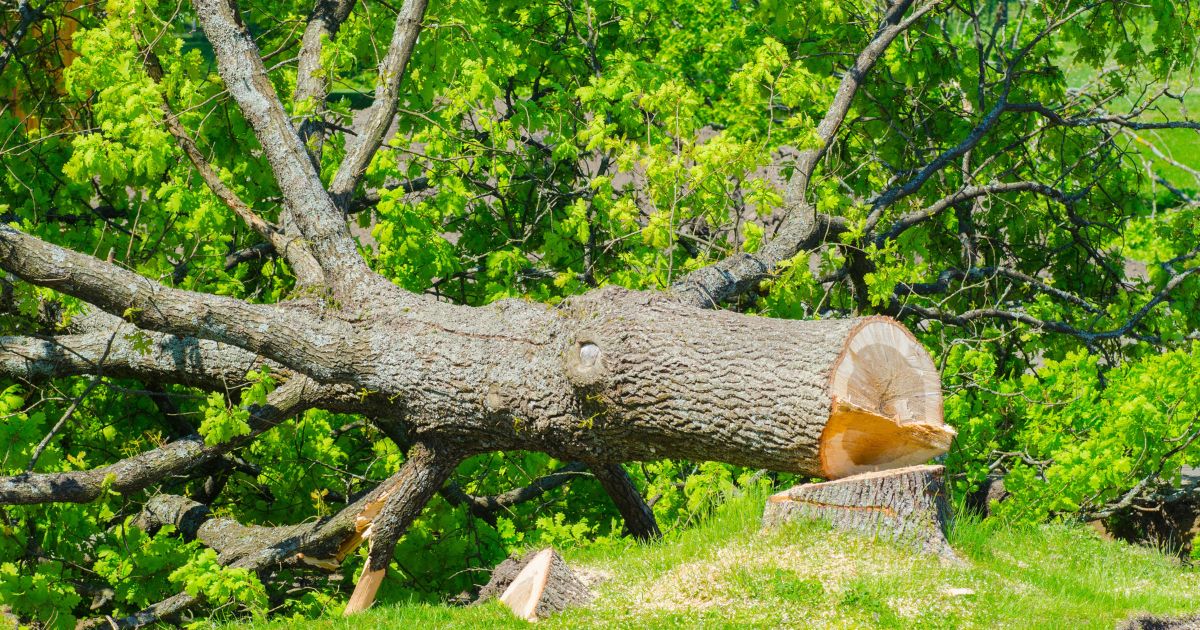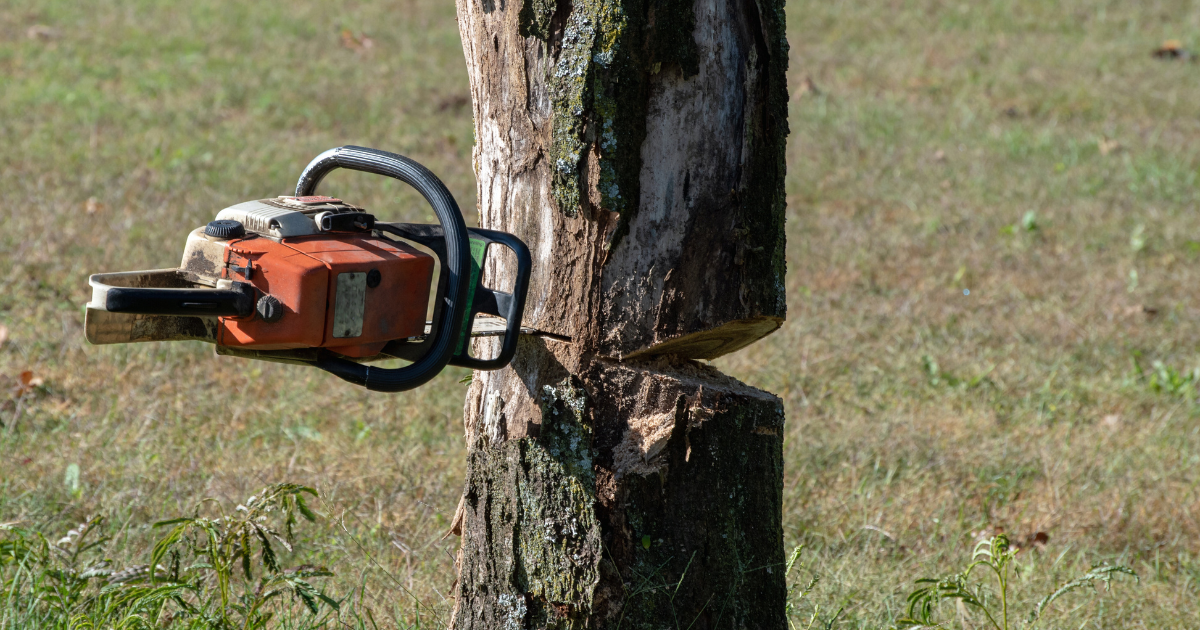
When most people think of tree felling, they picture a tree being chopped and tumbling down in one dramatic crash. In reality, tree felling is a precise operation designed to keep people and property safe. Done correctly, it’s an art form as much as a science. Done incorrectly, it can be extremely dangerous.
To answer the common question, ‘What is tree felling?’, our team of professional arborists has put together this guide on the cuts and techniques used to bring every tree down safely and responsibly.
What Is Tree Felling?
Tree felling means cutting down a tree in a controlled way to ensure it falls in a safe, planned direction. This process requires technical skill, careful planning, and experience. A properly executed tree felling protects people, property, and nearby vegetation.
Before starting, we assess several factors, including:
- Tree height, size, and condition
- Nearby buildings, fences, or power lines
- Weather and wind direction
Every site is unique, so we tailor our approach to each situation.
When Is Tree Felling Needed?
Tree felling is usually a last resort. Arborists often consider alternatives first, such as:
- Trimming
- Pruning
- Cabling
Sometimes, removing the entire tree is the safest or most practical option.
Safety is a primary reason for tree felling. Diseased, decayed, or unstable trees can be hazardous, especially during Auckland storms. If a tree is already damaged, felling may be the only way to remove the risk.
Tree felling is also used to create space when trees grow too close to buildings, power lines, or other plants. Removing these trees prevents future problems. In some cases, felling restores balance so healthier trees and plants can thrive.
How professionals fell a tree safely
Every safe tree felling project starts with a clear plan. Our arborists:
- Assess the tree’s health and lean
- Identify nearby targets like buildings or powerlines
- Map out the safest fall direction
- Set up escape routes and exclusion zones
This planning keeps the process controlled and everyone safe.
Types of Tree Felling Cuts
One of the most important parts of tree felling is the type of cut used. The tree felling cut not only determines the direction of the fall but also ensures safety for everyone involved. At Growth Maintenance, we use industry-standard tree felling techniques designed to keep control of the tree at every stage of the process.
Here are the main types of tree felling cuts arborists rely on:
The Directional or Notch Cut
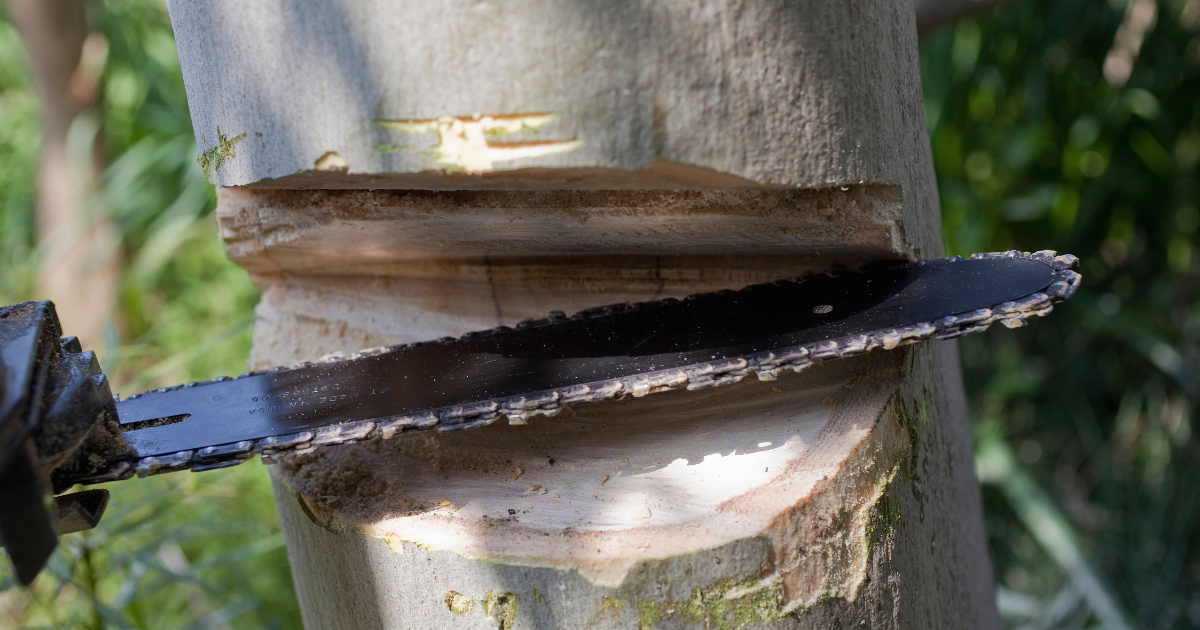
This is the first cut made to guide the direction of the tree’s fall. It usually involves cutting a notch into the tree on the side facing the intended direction. The notch acts like a hinge, helping to steer the tree safely as it falls.
The Back Cut
The back cut is made on the opposite side of the notch cut. It’s the final cut that releases the tree from its stump and allows it to fall. The depth, angle, and precision of the back cut are critical for safety and control.
The Humboldt Cut
A variation of the notch cut, the Humboldt cut is angled differently and is often used in professional logging or situations where controlling how the trunk hits the ground is important. While this cut is a bit less common in residential areas, it’s an essential skill for arborists.
The Open-Faced Notch
This cut provides the most control over the direction of the fall. It’s most commonly used when safety is the top priority, such as near houses, roads, or power lines, because it gives the arborist more flexibility during the process.
The Conventional Notch
A simpler cut often used in less risky environments, the conventional notch is effective but offers slightly less control than the open-faced method. That’s why this cut is chosen carefully for specific situations.
By combining these cuts with expert judgment, our professional arborists ensure every tree felling project proceeds with maximum control and minimal risk.
What happens after the tree is felled: limbing and bucking
After the tree is on the ground, we remove the branches (limbing) and cut the trunk into smaller sections (bucking). This prepares the wood and green waste for removal. We handle the entire process and leave your property tidy.
Why You Should Leave Tree Felling to the Professionals
Tree felling is not a DIY task. Without the right skills, equipment, and training, it can cause serious injury or property damage. Understanding tree felling is different from performing it safely.
At Growth Maintenance, our arborists combine expertise and local knowledge. We assess tree biology, identify hidden weaknesses, and choose the right cut for each situation. Our planning accounts for Auckland’s climate and property layouts to ensure precision.
Safety is our priority, so we set up protective zones and use specialised equipment to reduce risks. We also use environmentally responsible practices to minimise waste and protect the ecosystem.
Our Approach to Tree Felling in Auckland
At Growth Maintenance, we’ve built our reputation on safe, reliable tree services. Our tree felling work includes tailored solutions for emergencies, routine jobs, and complex sites.
We know tree felling can be stressful, so we communicate clearly and outline the safest approach. Our experienced arborists are committed to Auckland’s environment, so you can trust your property is in capable hands.
Need Professional Tree Felling Services?
Now that you understand what tree felling involves and the types of cuts professionals use, you can appreciate why this work requires skill and care. Whether you’re dealing with a storm-damaged tree, a safety concern, or simply need more space on your property, Growth Maintenance is here to help.
Our experienced team provides safe, sustainable, and reliable tree felling services across Auckland. To discuss your needs or book a consultation, get in touch with our team today.
Frequently asked questions about tree felling
Do I need council consent to fell a tree on my Auckland property?
Consent depends on Auckland Council's rules, as some trees are protected. We can help you check if your tree is protected to avoid fines.
Which trees are not allowed to be cut down?
Trees protected under the Auckland Unitary Plan, like notable or large native species, cannot be removed without consent. A qualified arborist can confirm a tree's status before any work begins.
What are the main types of tree felling used on residential properties?
We use straight felling for open spaces and sectional felling (dismantling) for sites near structures. Sectional felling is the safest and most common method in Auckland.
What happens to the wood and green waste after tree felling?
We manage all debris as part of our service. We can chip branches for mulch or remove all waste, leaving your property tidy.
Can I cut down a tree myself, or should I always use a professional arborist?
Tree felling is dangerous and should be left to professionals. A qualified arborist has the right equipment, insurance, and experience to do the job safely and correctly.

Contact us today
09 281 0120
Contact us today for a free consultation. Our expert arborists in Auckland will discuss your specific needs and provide a solution that fits within your budget. Let us help you reduce your property ownership costs with expert tree and garden care from Growth Maintenance.